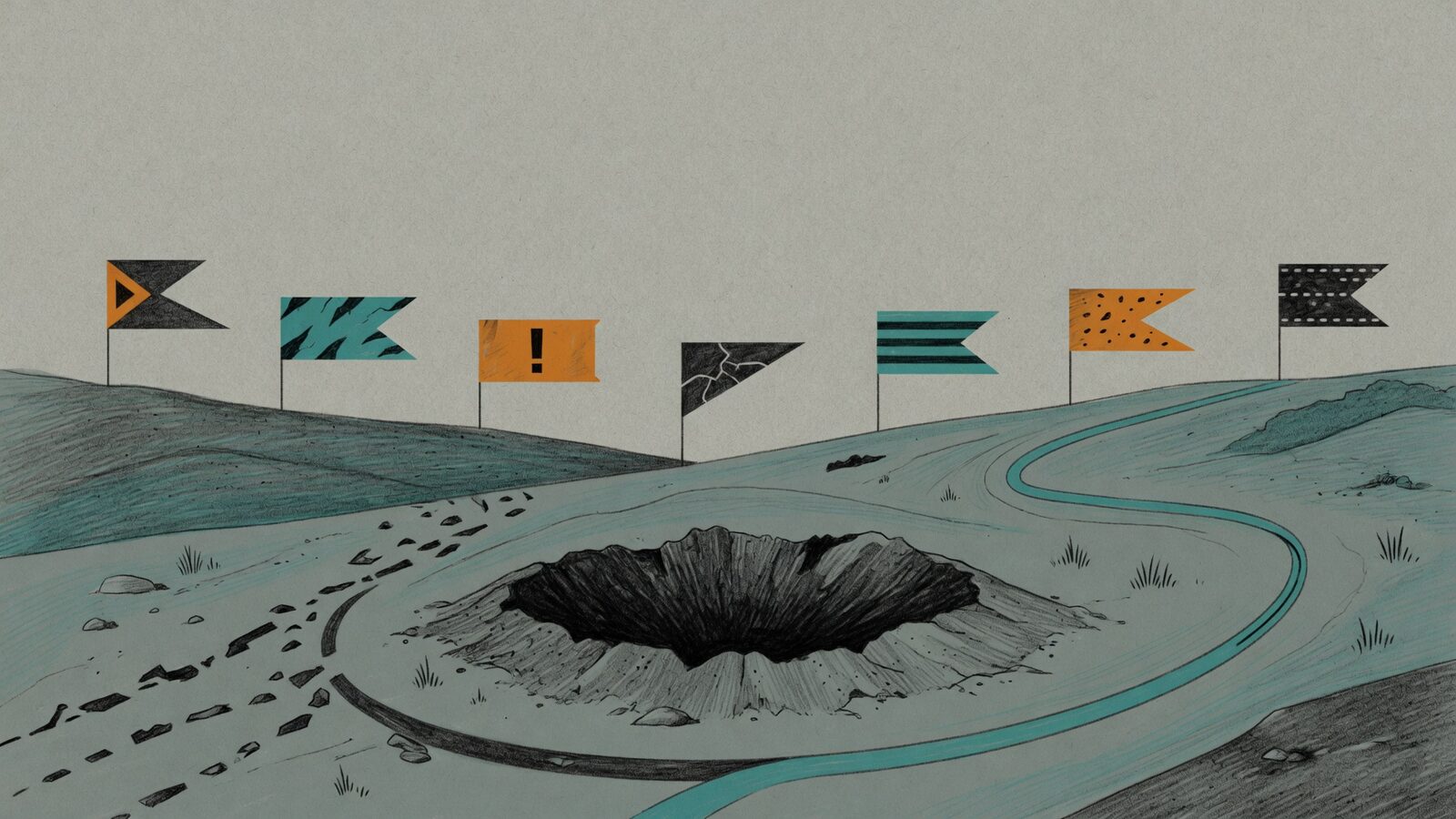
Most failed AI projects fail for the same seven reasons: tool-first thinking, no SOP, no owner, a big-bang launch, no guardrails, no measurement, and quitting at the first error. Industry surveys consistently find that the majority of AI initiatives stall or disappoint, and it is almost never the technology's fault. It is these seven, every time.
Key takeaways
- Most AI projects fail on process mistakes, not on the technology.
- The seven: tool-first thinking, no SOP, no owner, big-bang launch, no guardrails, no measurement, quitting early.
- Each has a simple fix, and the fixes are the disciplined basics.
- Treat early errors as tuning, not failure, exactly as you would a new hire.
- A good partner is mostly insurance against this list.
Here they are with the fix for each, and avoiding them is the flip side of doing implementation properly.
Mistake 1: Tool-first thinking
Buying the platform before understanding the problem. You end up with a shiny tool looking for a job. The fix: start with the process, not the product. Define the task and write the SOP first; choose the tool last. This is the single most common error, and it is why so many businesses own AI subscriptions they never really use, a trap explored in best AI agent platforms.
Mistake 2: No SOP
Handing an agent a vague task and expecting magic. An agent is only as good as its instructions, and "sort my emails somehow" is not instructions. The fix: write the task down step by step, in plain English, as if training a new starter. This is 80% of success, and skipping it is the reason many agents feel disappointing when the fault is the brief, not the agent.
Mistake 3: No owner
Nobody is responsible for the agent, so when it drifts, no one notices. Agents are not set-and-forget. The fix: give every agent a human owner who reviews its work and keeps its instructions current. Accountability stays with a person, always, which is also what keeps the whole thing safe.
Mistake 4: The big-bang launch
Trying to automate everything at once, which overwhelms everyone and guarantees something breaks visibly. The fix: one agent, one process, supervised, then expand. Small wins compound; big bangs blow up. This is the same one-at-a-time discipline that runs through every sensible rollout.
Mistake 5: No guardrails
Letting an agent send, spend, or delete without limits. This is the mistake that makes headlines. The fix: build the guardrails in from day one. Approval queues for anything customer-facing, and destructive permissions never granted at all. Control by architecture, not hope, which is the heart of are AI agents safe.
Mistake 6: No measurement
Running an agent with no way to tell if it is actually helping. Without a baseline you cannot prove value or spot decay. The fix: measure the before, hours spent or time-to-respond, so the after means something. What you cannot measure, you cannot trust or improve, and it is what makes the ROI real rather than a feeling.
Mistake 7: Quitting at the first error
The agent makes one mistake, everyone panics, the project dies. But a new employee makes mistakes in week one too, and you do not fire them for it. The fix: treat early errors as tuning, not failure. Correct, refine the SOP, and let trust build. The businesses that win are the ones that pushed through week one rather than giving up at the first wobble.
The pattern behind all seven
Look closely and every mistake is a shortcut around the boring, disciplined work: define the process, assign an owner, start small, build guardrails, measure, and persist. Do those and you sidestep all seven. A good implementation partner is, honestly, mostly insurance against this list, because they have watched each mistake sink projects and they build to avoid them. None of the seven is exotic or technical; they are all failures of discipline, which is good news, because discipline is entirely within your control.
Why these mistakes are so common
It is worth asking why sensible businesses keep making the same seven errors, because understanding it helps you avoid them. The root cause is that the boring, disciplined path feels slower and less exciting than the shortcuts, so people take the shortcuts. Buying a tool feels like progress; writing an SOP feels like homework. Launching everything feels ambitious; starting with one dull task feels timid. Panicking at an error feels responsible; pushing through feels reckless. In every case the instinct that feels right leads to the mistake, and the discipline that feels slow leads to success. Knowing this lets you catch yourself in the moment and choose the boring, reliable path on purpose.
How to avoid all seven at once
The reassuring thing is that a single simple sequence avoids the entire list. Pick one frequent, low-risk process. Write its SOP clearly. Give it a human owner. Build guardrails from day one. Capture a before measure. Run it supervised for two weeks, treating early errors as tuning. Then, once it is reliable, expand to the next process. Follow that sequence and there is simply no room for tool-first thinking, missing SOPs, absent owners, big-bang launches, missing guardrails, no measurement, or premature quitting, because each step in the sequence is the direct antidote to one of the seven mistakes. The discipline is not complicated; it just has to be followed in order.
The costliest mistake of all
If you had to rank the seven, quitting at the first error is the one that wastes the most, because it throws away work that was almost finished. An agent that stumbles in its first week is not broken; it is a new starter making the mistakes every new starter makes, and the businesses that panic and pull the plug lose all the progress that a fortnight of tuning would have turned into a reliable, hour-saving worker. The others on the list cost you a slow start; this one costs you the whole result at the moment it was about to pay off. The fix is a change of mindset more than method: expect early errors, treat them as data, refine, and persist. The agents that transform businesses are the ones whose owners did not give up in week one.
Learning from other businesses' failures
The value of a list like this is that you get to learn from mistakes without paying for them yourself. Every one of these seven has sunk real projects and disappointed real owners who then concluded, wrongly, that AI does not work for businesses like theirs. It was not the AI; it was the shortcut. By knowing the seven in advance, you can watch for the tempting wrong turn at each stage, the tool bought too early, the SOP skipped, the panic at the first error, and choose the disciplined path instead. That is far cheaper than discovering each mistake the hard way, and it is exactly the accumulated experience a good implementation partner brings, having watched these patterns play out many times.