An AI employee is an agent given a defined role, not just a task. It has a job title, a remit, tools it is allowed to use, and work it hands you for approval. Where a chatbot answers and an agent completes a task, an AI employee owns an ongoing function, like an EA, a researcher, or a credit controller who happens to be software.
Key takeaways
- An AI employee is an AI agent given a standing role and a name, so you set it up once instead of re-briefing it daily.
- The best first roles are high-frequency and low-judgment: an assistant, a researcher, and a chaser.
- It costs a fraction of a human hire, works around the clock, and never forgets, but it does not replace human judgment or relationships.
- The honest framing is not "replace," it is "redeploy": hand the drudgery to software and move your people up to the work only humans can do.
- You hire your first one by picking the role that would give you back the most hours, then supervising it for two weeks.
I have four of them. Donna runs my mornings as chief of staff. Atlas writes. Scout researches. Vega drafts outreach. They work overnight, and nothing they produce reaches a customer until I have tapped approve. The first time I woke up to a finished day's work waiting for a yes, the penny dropped: the ceiling on my business was never the market, it was the hours in my day. You can read that fuller story on the Hypercharge home page.
AI employee vs AI agent: what is the difference?
An agent is a worker for a task. An AI employee is that worker given a standing role and a name. The technology is the same; the framing changes how you use it. You do not re-brief an employee every morning. You set the role once, and it shows up to do the job on its own trigger. A handful of them working together, handing work to each other, is what we mean by building an AI team.
What does an AI employee cost versus a human hire?
| Human junior hire | AI employee | |
|---|---|---|
| Monthly cost | Salary plus tax, pension, tools, space | A few hundred to low thousands of euro |
| Hours worked | ~40 of 168 | Available around the clock |
| Onboarding | Weeks | Days |
| Management | Ongoing | Approval queue, minutes a day |
| Judgment and relationships | Wins here | Loses here |
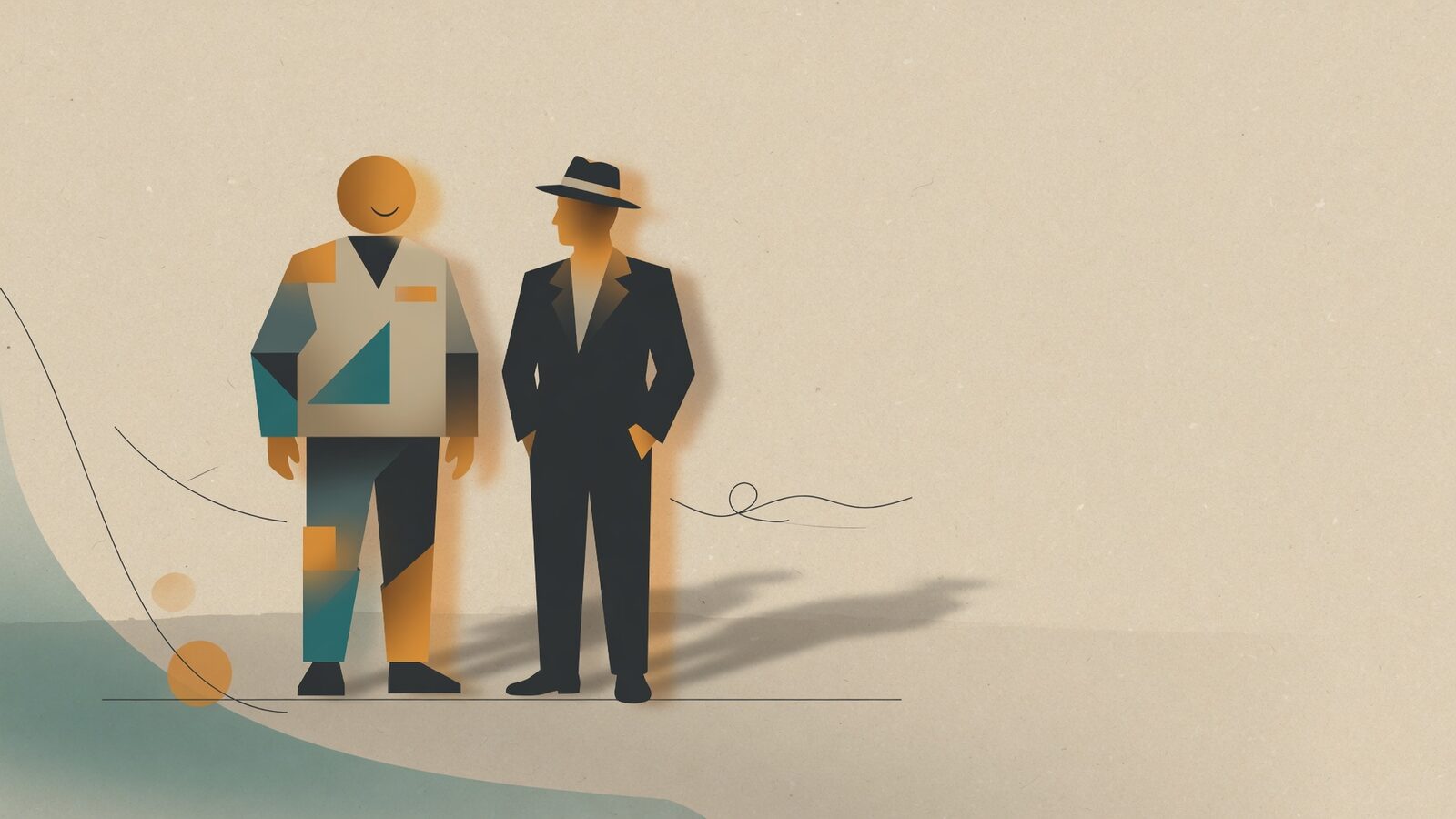
I say this as someone who loves hiring people: the junior-admin job is quietly dissolving. Not the human, the drudgery. The person gets redeployed to work that needs a human. For the full sum, see AI agent vs new hire and how much AI agents cost.
Which roles should an AI employee fill first?
Start where the work is high-frequency and low-judgment. The AI executive assistant role, running your inbox and diary. The researcher, producing pre-call briefs and reports. The chaser, on invoices and follow-ups. These three give back the most hours the fastest, and they are the safest to supervise while trust builds. The most senior of them, the one that runs your day and your approvals, is the AI chief of staff.
Leave the relationship-led, judgment-heavy roles with humans. Your senior salesperson, your client lead, your negotiator. An AI employee supports them; it does not replace them.
A tangible example: imagine Tom's one-person consultancy
Imagine Tom, a solo consultant who bills for advice but loses a day a week to admin, research, and chasing. He hires his first AI employee as a researcher: before every client call it produces a one-page brief, and each Friday it drafts his weekly update. It is easy to see how someone in Tom's position could claw back most of that lost day, and spend it on billable work instead. He has not added headcount or overhead. He has added capacity. That is the quiet unlock behind the phrase "the one-person business with the output of ten," which we cover here.
What an AI employee cannot replace
It will not build the relationship that closes your biggest deal. It will not have the hard, human conversation. It will not own accountability, you do, always. And it needs you in the loop on anything that reaches a customer or moves money. Treat it as a tireless junior, not an autonomous executive, and it will serve you brilliantly.
Should your business hire one?
If you are the bottleneck everything runs through, if recurring admin eats your week, and if you would happily approve work instead of doing it, then yes. The honest way to find out which role to start with is a proper audit of where your hours actually go, and whether you want to build it yourself, with us, or fully handled. The three paths are laid out in DIY vs done-with-you vs done-for-you.
Signs you are ready to hire your first AI employee
You do not need to feel "ready" in some grand sense; you need three simple things to be true. First, there is a task you do most days that you could describe to a new starter in a paragraph. Second, that task rarely needs delicate judgment, so a mistake caught in a draft costs nothing. Third, you would genuinely rather approve the work than do it yourself. If those three hold, you are ready. Most owners discover the readiness was never the blocker; the blocker was not knowing which role to start with, which is exactly what an audit settles in twenty minutes.
A day in the life of an AI employee
Picture the workday of a single AI employee, the researcher. At 6am it wakes on a schedule and pulls the day's calendar. For each meeting, it builds a one-page brief: who is in the room, their company, recent news, and the likely priorities. By 7am those briefs sit in a folder, ready. Mid-morning, a lead comes in, and the researcher enriches it with public information so your reply can be specific. In the afternoon, it compiles the numbers for your weekly report. At no point does it send anything to a client or change a record without your say-so. It prepares; you decide. Multiply that across four roles and you have a small back office that never sleeps and never asks for a day off.
How AI employees hand work to each other
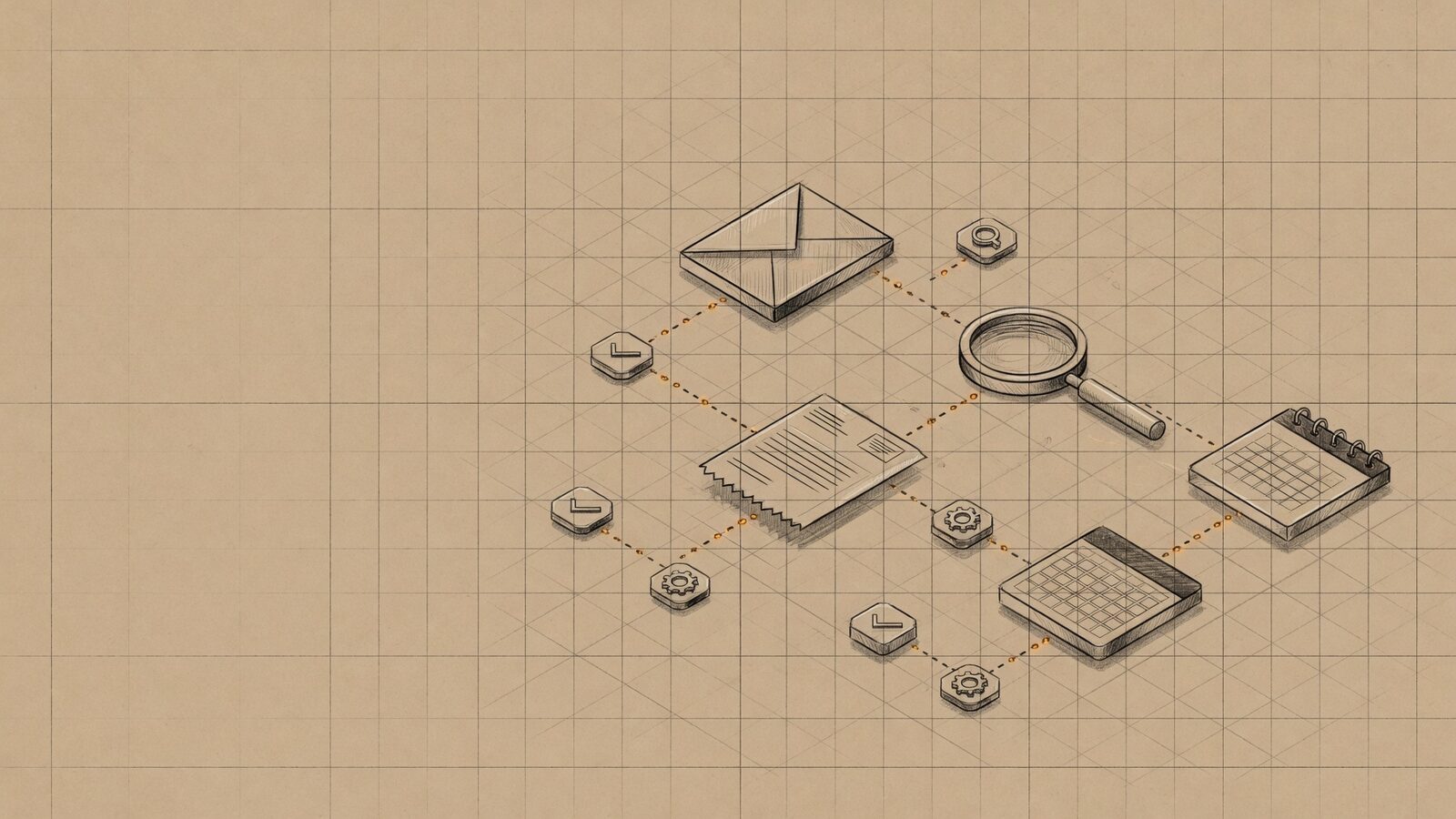
The real leverage arrives when your AI employees stop working in isolation and start passing work between them, like departments in a real company. The researcher's prospect dossier flows to the outreach drafter, which writes a message in your voice and drops it in your queue. The note-taker's meeting summary flows to the chaser, which follows up on the actions. You are no longer the courier carrying work between tools; the work travels on its own, and you sit at the approval point. That coordination layer, agents plus shared memory plus an approvals queue, is what we call an AI operating system.